







National Cemetery Administration
Veterans Grants Planning Model Overview
 General Program Requirements
Project Design Requirements
Site Considerations - Site Selection Standards for a Veterans Cemetery
Site Description and Site Analysis
Planning Process for Establishing Veterans Cemeteries
Phasing
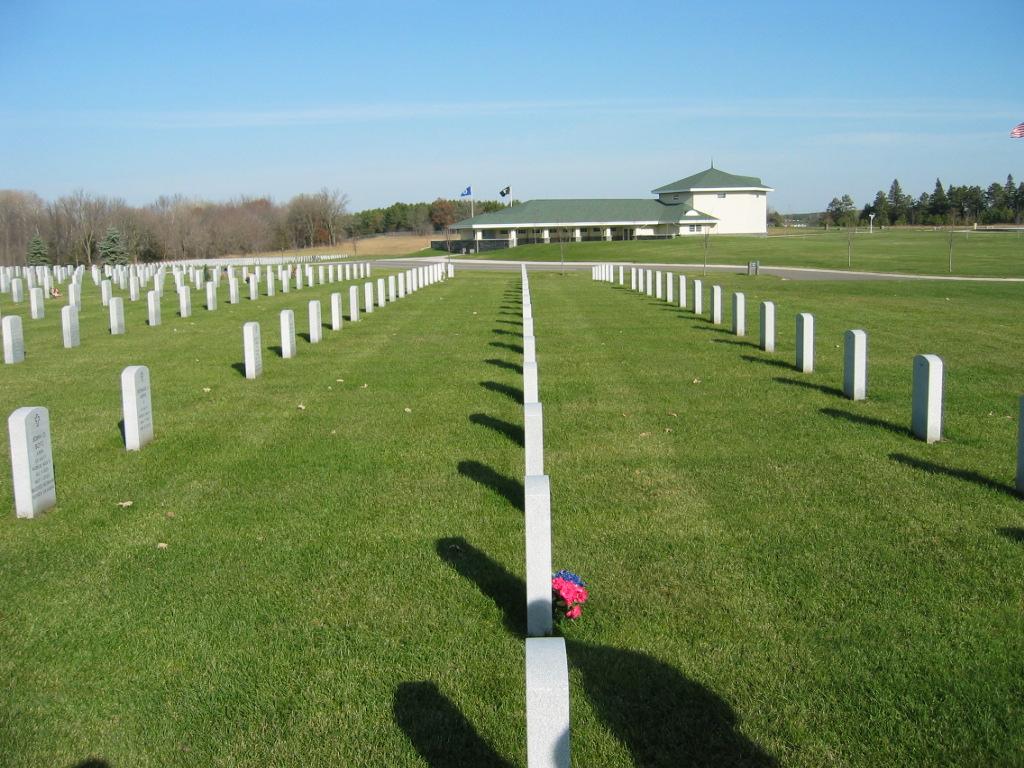
The appearance of Veterans cemeteries demonstrates to America’s Veterans that the nation appreciates their selfless service and the sacrifices they have made. Elevating the appearance of the cemeteries to shrine status signals the commitment to maintain our Veterans’ cemeteries at the highest standards forever. Veterans cemeteries help foster patriotism and preserve the nation’s history.
Each visitor should depart feeling that the grounds, the gravesites and the environs of the state cemetery are a beautiful and awe-inspiring tribute to those who gave much to preserve the nation’s freedom and way of life.
Each Veterans cemetery exists as a Veterans shrine and serves as an expression of the appreciation and respect of a grateful state and nation for the service and sacrifice of its Veterans. Each cemetery provides an enduring memorial to their sacrifice as well as a dignified and respectful setting for their final rest.
To satisfy this requirement, pre-applications should include a written assurance that the state, territory or tribal government will maintain the cemetery according to VA National Cemetery Administration standards as established in 38 CFR Section 39.6(4).
In general, Veterans cemetery projects should be built to create a sense of visual continuity with the site and reflect the tradition and heritage of the area. Cemetery buildings should not be isolated, preeminent elements of the cemetery. Buildings should blend with the site design and may be contemporary, single-story architectural structures found in the project region, or transitional, with a style reminiscent of historic state architecture. All buildings should be designed to reflect permanence and durability with minimum maintenance required. The overall design should consider human scale and privacy for visitors. A consistent architectural expression shall be maintained throughout the cemetery.
Cemetery master plans should be laid out in a looped circulation configuration. Loop configurations include roads that separate vehicular, pedestrian and maintenance traffic. Loop configurations also help define memorial areas but roads should not be used as boundaries to circumscribe the burial areas. The design should establish a strong sense of entry into the cemetery and create an interesting and dramatic sequence of spaces.
The development plan should be divided into phases, each consisting of an area approximating the burial need over a 10-year period. Construction of burial areas in latter phases should be programmed to be completed two years before actual need. This lead-time allows for the continuity of interment service.
Prior to construction, the site chosen should be evaluated for environmental impact and issues. Projects are required to support a FONSI (Finding of No Significant Impact) indicating the project will not have an undue negative impact on the environment.
In general, cemetery plans should avoid lakes, greenhouses and bridges. Chapel buildings, whether freestanding or part of another structure, are not allowed under 38 CFR (Code of Federal Regulations) Part 39. The cost to build and maintain cemetery features of this nature is not supported by the Veterans Cemetery Grants Program. Additionally, per the CFR, the grants program does not fund cemetery land costs or offsite utilities. Some current state cemeteries received land donations for their project.
The following is a list of the reference documents required for the design of the project.
- 38 CFR (Code of Federal Regulations), Part 39
- Your State, Territorial or Tribal Government Contract Requirements (A/E, Construction)
- Veterans Cemetery Grants Program - Grant Information Kit July 2001
- A/E Submission Requirements; PG-18-15 Volume D June 1999
All cemetery designs must conform to state, territory, tribal government and local codes and requirements.
Site Selection Standards for a Veterans Cemetery:
- Proximity - Locate the site as close as possible to the most densely populated location in the area under consideration. Not only actual distance, but travel time to the site must be considered.
- Size - Site acreage is sufficient to provide at least 20-40 years of gravesites based on state, territorial or tribal government projected burial rate. More acreage is encouraged. The acreage required will depend on the burial method, gravesite yield, projected burial rates based on the state’s estimated needs for at least 20 years, and the project site’s proximity to other national and state cemeteries.
- Shape - Uniform boundaries, undivided by roads or easements, with generally square or rectangular shapes are desired. Irregularly shaped sites are more difficult to access and less efficient to design and develop.
- Accessibility - Site accessible by highway. Public transportation service is desirable but not required. Road quality of access streets should also be considered.
- Utilities & Water - Availability of public utilities (electricity, water, sewer, gas) is important. However, on-site septic systems and on-site potable water wells or ponds are acceptable. An adequate water supply for irrigation is of primary importance. Consider the availability of on-site or off-site recyclable water. The grant program does not fund off-site improvements such as water line extensions.
- Surrounding Land Use - Surrounding land should be free from noise or adverse environmental impact(s) (nuisance, landfills or hazardous waste sites). Consider the attractiveness and compatibility of adjacent land. Sites adjacent to visually objectionable, loud noise, high traffic, or other nuisance elements should be avoided. Both current and future projected land use are considered.
- Soils - Soils should be of a quality which will provide adequate topsoil for growing turf. The soil should have adequate stability for constructing roads and buildings and should be free from shallow-depth groundwater. The water table must be lower than the maximum proposed depth of burial. There should be no sub-surface obstructions or hazardous waste present. Site soil information is available through the Natural Resources Conservation Service, United States Department of Agriculture (www.nrcs.usda.gov).
- Topography - Land should be relatively level to rolling terrain for areas to be developed. The grade of the site should be in the two to ten percent range. There should be sufficient slope to enable proper drainage of the site. Ravines, wetlands, lakes, streams, floodplains and sinkholes cannot be developed. If hilly land is used, access must not be cost prohibitive.
- Aesthetics - Existing site amenities such as pleasant views and quality vegetative cover are favorable.
- Restrictions to Development - The presence of elements such as cultural/historic/archaeological elements, utility easements, rights-of-way or mineral rights can hamper or legally prevent development. Presence of endangered species limits land development. Potential flood hazards must be avoided.
- Site Suitability and Acceptability - Consider the following tests and items to determine site suitability and acceptability: 1) Soil Borings and Test Pits, Perk Test (Septic Field Requirements), Soil Sample Analysis; 2) Well, Aquifer Level, Underground Water Quality Testing; 3) Historic and Archaeological Land Use Review; 4) Cultural Resources; 5) Flood Plains, Wetlands, and Endangered Species; 6) Land Use and Public Access; 7) Utilities; 8) Hazardous Waste; 9) Corrective Action Agreement.
Site Description and Site Analysis
Per 38 CFR 39.8, the plan for a Veterans cemetery requires a description of the site and its various elements. The description should explain specific development of the site, design concepts and include space and area requirements (space outline) for support facilities. The description should also include: proposed and existing burial acreage; available gravesites; total acreage and gravesites upon completion of the project; and the projected annual interment rates. (If the cemetery is to be developed in phases, each phase will be handled as a separate project.)
As part of the site selection process, NCA may provide states, territories or tribal governments with demographic data from the Future Burial Needs report. This information will assist states, territories or tribal governments in locating Veterans cemeteries in the most advantageous sites. Through its technical assistance program, NCA will assist State, Territorial or Tribal Directors of Veterans Affairs in answering related questions from other state, territorial or tribal government officials.
Cemeteries established under the grant program must conform to VA-prescribed standards and guidelines for site selection, planning and construction. Cemeteries must be operated solely for the interment of service members who die on active duty, eligible Veterans and their spouses and minor children. The administration, operation and maintenance of a VA-supported state cemetery are solely the responsibility of the state, territory or tribal government. VA is authorized to pay a “plot allowance” of $300 to a state, territory or tribal government for expenses incurred in the burial of an eligible Veteran.
Planning Process for Establishing Veterans Cemeteries
Using the Site Selection Standards listed above, states, territories and tribal governments should identify several potential sites. Sites should be assessed for overall site potential, proximity to Veterans in the state, topographical features, available acreage and the surrounding land use. Once the number of sites has been narrowed to the most favorable locations, consider the suitability of the land for development as a cemetery. The preferred site is then described in the pre-application for a grant. States have always been partners with the Federal government in providing for the needs of military Veterans. The VA Veterans Cemetery Grants Program (VCGP) assists the states, territories and tribal governments in providing gravesites with grants used to establish, expand or improve Veterans cemeteries owned and operated by the state, territory or tribal government.
Cemeteries are constructed in phases based on the needs of the Veteran population. The initial phase of construction should be based on a projected ten-year interment rate. Initial development of larger increments would unnecessarily increase state maintenance costs. This first phase includes the development and construction of the cemetery infrastructure as follows:
- Entry Features (including Avenue of Flags)
- Roads and Parking
- Avenue of Flags
- Assembly Area (Flag Location)
- Burial Areas and Burial Sections
- Committal Service Shelter
- Columbarium and In-Ground Cremain Burials
- Memorial Walk
- Administration Building
- Public Information Center (PIC)
- Public Restrooms
- Maintenance Building
- Service Yard
- Irrigation System
- Utility Distribution System
- Carillon Tower
In subsequent phases cemeteries should look at burial needs for 10 years. Subsequent phases will include the build out of additional burial sections and continuation of the columbarium, as required. The additional phases will require the extension of roadways to access the planned burial sections. Initially, cemeteries are specifically designed with loop roads to easily accommodate additional phases. Planning for the second phase should start approximately six years after the cemetery opens.


